Real-Time RPO Monitoring in Azure: How I Enhanced Disaster Recovery Visibility for a Major European Bank
A case study on transitioning from log-based monitoring to an API-driven approach to meet high-precision banking standards.
In the financial sector, resilience is the currency of trust. When I was tasked with managing the infrastructure for a major European bank, it was clear that their Disaster Recovery (DR) standards required more than just a functional plan—they required absolute, real-time visibility.
This post explores how I helped them transition from a standard Log Analytics approach to an API-driven monitoring solution to ensure their Recovery Point Objective (RPO) tracking met the highest possible precision.
Understanding the Stake: Why Precision Matters
Recovery Point Objective (RPO) answers the critical question: “How much data can be afforded to lose?” For a major financial institution, maintaining a low RPO is a core commitment to their customers.
Under strict internal governance and frameworks like DORA, I helped the bank implement a monitoring strategy that doesn’t just report health, but proves it with second-level accuracy.
Phase 1: Moving Beyond the Standard Approach
The initial architecture followed the traditional Azure monitoring pattern: streaming logs to a central Log Analytics Workspace (LAW).
The Opportunity for Improvement
While this setup is a solid foundation for auditing, I identified a technical limitation regarding “Live Accuracy.” Because log ingestion involves inherent latency, the data in the workspace could occasionally lag behind the actual production state.
To help the bank satisfy audits that demand precise data at any given second, I recommended moving toward a more direct monitoring model.
Phase 2: The Shift to Azure REST API
To achieve the visibility they needed, I moved the logic from passive log-waiting to active resource querying. I designed an Azure Logic App that communicates directly with the Azure Site Recovery (ASR) provider.
How this shift added value:
- Direct State Access: Instead of reading a “historical report” of an event (the log), I enabled the bank to ask the Resource Provider for the current state of every replicated item.
- Granular Logic: This allowed us to calculate the exact delta between “Last Successful Sync Time” and “Current Time” before any potential RPO deviation could impact compliance.
Security-First Architecture
In a high-compliance environment, I ensured that security remained the foundation. By utilizing a System-Assigned Managed Identity for the Logic App, I provided a secure, passwordless authentication flow that seamlessly integrated with their existing security frameworks.
Technical Deep Dive: The Logic App Workflow
Below is the sanitized JSON definition of the solution I implemented. The authentication block ensures that the bank’s identity management remains robust and secret-free.
1
2
3
4
5
6
7
8
9
10
11
12
13
14
15
16
17
18
19
20
21
22
{
    "definition": {
        "$schema": "https://schema.management.azure.com/providers/Microsoft.Logic/schemas/2016-06-01/workflowdefinition.json#",
        "actions": {
            "HTTP_Query_Resource_Graph": {
                "type": "Http",
                "inputs": {
                    "uri": "https://management.azure.com/providers/Microsoft.ResourceGraph/resources?api-version=2021-03-01",
                    "method": "POST",
                    "headers": { "Content-Type": "application/json" },
                    "authentication": {
                        "type": "ManagedServiceIdentity"
                    },
                    "body": {
                        "subscriptions": ["<YOUR_SUBSCRIPTION_ID>"],
                        "query": "recoveryservicesresources | where type =~ 'microsoft.recoveryservices/vaults/replicationfabrics/replicationprotectioncontainers/replicationprotecteditems' | extend vmName = tostring(properties['friendlyName']) | extend rpoInSeconds = toint(properties['providerSpecificDetails']['rpoInSeconds']) | where isnotempty(rpoInSeconds) and rpoInSeconds > 600 | project vmName, rpoInSeconds | order by rpoInSeconds asc"
                    }
                }
            }
        }
    }
}
The Result: Strengthened Resilience
The implementation provided the bank with a high-fidelity monitoring tool that matches their rigorous operational standards:
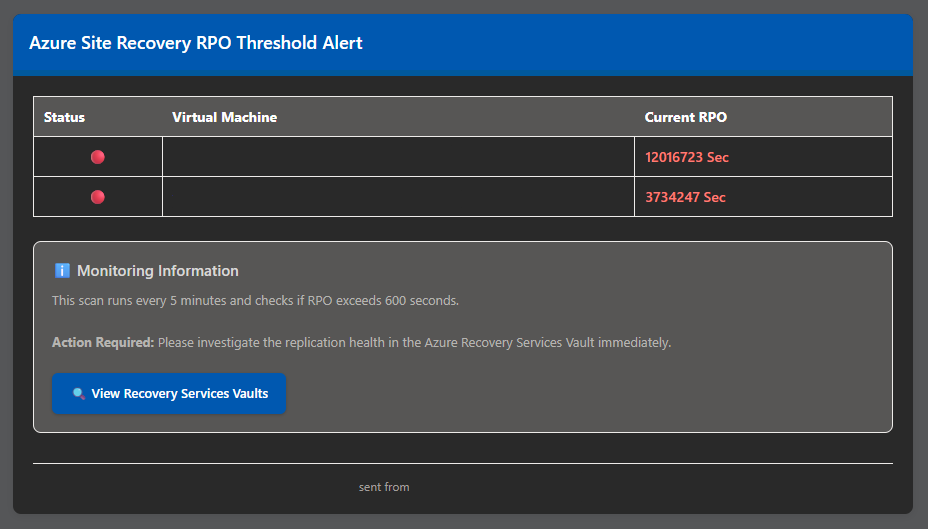 Figure 1: Automated HTML Email report designed to provide immediate clarity for operations teams.
- Immediate Visibility: Real-time HTML reports that give the team a clear view of their RPO status.
- Audit Readiness: A proactive “pull-based” system that provides definitive proof of compliance during internal and external reviews.
- Operational Efficiency: The solution is highly cost-effective and provides a superior alert-to-action ratio for the operations team.
Conclusion
By helping the bank move closer to the API layer, I was able to deliver the precision and security required for their critical infrastructure. This journey from passive logging to active polling is a testament to how the right architectural shift can solidify operational resilience in the most demanding environments.